
University SEO: How Do Colleges and Universities Rank for the Programs Students Are Searching For?
Higher education search splits into distinct buyer journeys — undergraduate applicants comparing majors, graduate students vetting faculty research, working adults hunting online degrees with no GRE, and international students navigating visa questions. RankSages builds the program pages, department authority, and accreditation signals that put your institution in front of each one, in Google and in AI answers.
Prospective students search by program, not by school name — 'best online MBA no GMAT' or 'accredited nursing program near me' — months before they ever fill out an inquiry form. RankSages builds degree-specific landing pages, faculty and research content, and accreditation-backed trust signals that win those searches across Google and AI engines like ChatGPT and Perplexity, driving qualified inquiries through every admissions cycle.
Month-to-month · AEO + GEO included · We reply within one business day.

Reviewed by Vinay Upadhyay, Founder · 1,000+ clients since 2010
Prospective students search by program, not by school name — 'best online MBA no GMAT' or 'accredited nursing program near me' — months before they ever fill out an inquiry form. RankSages builds degree-specific landing pages, faculty and research content, and accreditation-backed trust signals that win those searches across Google and AI engines like ChatGPT and Perplexity, driving qualified inquiries through every admissions cycle.
Common university SEO obstacles, solved.
The real reasons colleges and universities sites stall in search — and exactly how we fix each one.
Program Pages Buried Inside One Academics Page
Most university websites list every major and degree under one sprawling academics section, so a prospective nursing student searching 'accelerated BSN program' finds a directory listing instead of a dedicated page built to answer their exact question. RankSages builds a standalone, keyword-mapped page for every degree, certificate, and concentration so each one can rank and convert independently.
Accreditation Proof Scattered Instead of Structured
Programmatic accreditation from bodies like AACSB, CCNE, ABA, or LCME often lives on one buried compliance page instead of the specific program it governs, leaving both applicants and AI engines unable to confirm whether a given degree actually qualifies a graduate for licensure. RankSages surfaces that accreditation status directly on each program page, in visible copy and schema markup alike.
Faculty Expertise Invisible to Search and AI
Research-active faculty and specialized labs are exactly what graduate applicants and journalists search for, but bios trapped in PDF course catalogs or outdated directory listings never surface for those queries. RankSages converts faculty profiles into structured, crawlable pages tied to research areas and publications, so a prospective PhD student researching a specific subfield finds your department instead of a peer institution's.
Admissions-Cycle Content That Arrives Too Late
By the time Early Decision or FAFSA deadlines arrive, applicants have already been researching cost, format, and program fit for months, and a site with only bottom-funnel 'apply now' pages misses that entire research window. RankSages builds evergreen cost-comparison and program-format content timed to the admissions calendar, so your institution is already the established answer before deadline-driven search volume ever peaks.
One connected system that makes university brands visible across Google and every AI engine.
Five disciplines, one spine — SEO for Google, AEO & GEO for assistants, AIO for AI Overviews, GXO for the full generative journey.
Search Engine Optimization
RankSages builds degree-specific landing pages — undergraduate majors, online graduate programs, certificate tracks — each targeting its own keyword cluster around program names, formats, and locations, so search engines index and rank your institution program by program instead of by a single generic academics page.
Answer Engine Optimization
RankSages structures financial-aid, admissions-requirement, and program-comparison content around the exact questions applicants type into assistants — 'is a master's in X worth it,' 'GRE waiver online programs' — so answer engines cite your institution's pages as the direct response instead of a forum thread or aggregator.
Generative Engine Optimization
RankSages develops faculty research profiles, outcomes data, and program-comparison content that generative engines draw on when a student asks for the strongest programs in a given field, so your department is named directly in AI-generated shortlists rather than left out in favor of a better-documented competitor.
AI Overviews Optimization
RankSages optimizes program pages, accreditation detail, and admissions FAQs to match the structured, evidence-backed format Google's AI Overviews favor, so your cost, format, and outcomes information surfaces inside those zero-click panels instead of sending the search straight to a ranking aggregator.
Generative Experience Optimization
RankSages maps the full journey a prospective student takes through generative search — from an initial 'best online MBA' prompt through an AI-generated comparison of formats and cost — and aligns your program pages, faculty proof, and inquiry forms so your institution converts at every one of those AI-driven touchpoints.
What makes our university SEO different.
A founder-led team that has done search since 2010 — building for Google and AI answers alike.
- We build dedicated landing pages for every degree program — RN to BSN, online MBA, data science master's — so each one ranks on its own keyword cluster rather than disappearing into one academics page.
- RankSages turns faculty bios, published research, and lab pages into structured authority content, so graduate applicants and journalists researching a specific professor's work find your department instead of a competitor's.
- We surface programmatic accreditation — AACSB, CCNE, ABA, LCME — state authorization for online programs, and outcomes data directly in page copy and schema, since prospective students filter out unaccredited or unlicensed programs immediately.
- RankSages maps content to the admissions calendar — early decision deadlines, FAFSA opening, decision-day yield content, rolling-start online cohorts — so your pages surface exactly when applicants, parents, and counselors are searching.
- For cross-border searches — 'universities in the US for international students,' visa and immigration-paperwork questions, English-proficiency requirements — we build country-specific and language-aware content that meets applicants where their search actually starts.
How we grow colleges and universities.
Audit & Research
We analyze your colleges and universities market, competitors, keywords, and technical health to find the highest-impact opportunities.
Strategy & Roadmap
We build a 90-day action plan tailored to your colleges and universities vertical with clear milestones.
Execute & Optimize
We implement technical fixes, create industry content, build authority links, and optimize AI-search presence.
Report & Scale
Monthly reporting on rankings, traffic, and leads. We continuously refine and expand what works.
Built for every kind of higher education institution.
Strategy tuned to your exact sub-segment — not a generic template.
Real Search Console results — documented, never invented.
An anonymized client (eCommerce · APAC). Figures pulled directly from Google Search Console for the exact window Google reports.
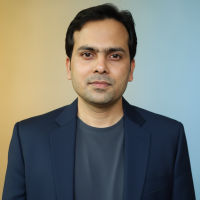
I built RankSages because I was tired of watching good businesses get bad advice. Buyers ask ChatGPT for recommendations now, and most agencies still have no answer for that shift.
A complete university search program.
Every lever, in one engagement. Explore each service:
View All Services →Colleges and Universities SEO & AI search, answered.
The questions buyers ask us most — including how AI search changes the game.
Brand searches for your school's name are easy to win because nothing else competes for that exact term. Program searches are a different contest entirely — 'best data analytics master's Texas' or 'accelerated nursing program' compete against other universities, aggregators like Niche and Peterson's, and now AI-generated comparison lists. RankSages builds dedicated pages for each degree, certificate, and concentration, each targeting its own keyword cluster and outcomes data, so you compete on program-level searches instead of relying on brand recognition alone.
When a working adult asks ChatGPT 'best online MBA no GMAT' or a prospective PhD student asks Perplexity which labs are publishing in a given field, the model pulls from program pages, faculty research, and outcomes data that are structured clearly enough to cite. RankSages builds program and faculty content around the specific questions applicants are asking assistants, with accreditation, cost, and format detail spelled out plainly, so your programs get named in AI-generated shortlists instead of a competitor's or a directory's.
A single buried policies page tells neither search engines nor applicants which specific program is actually accredited by which body, and for programmatic accreditation like AACSB or CCNE that distinction determines whether a student can sit for licensure at all. RankSages places accreditation and state-authorization detail directly on the relevant program page, in both visible copy and schema markup, so the exact students who need that reassurance — and the AI engines summarizing it — find it without hunting.
Application deadlines create real spikes, but the research that leads to an application starts months earlier: cost comparisons, program format questions, and 'is X degree worth it' searches happen well before Early Decision or FAFSA deadlines. RankSages builds evergreen research-stage content alongside deadline-specific pages timed to your admissions calendar, so your institution is already established as an answer by the time application season's high-intent searches arrive, rather than trying to catch up once volume peaks.
SEO ranks you in Google's traditional results. AEO (Answer Engine Optimization) structures your content so assistants like ChatGPT and Perplexity quote you as the answer. GEO (Generative Engine Optimization) and AIO build the authority and formatting that AI engines and Google AI Overviews rely on. RankSages includes all of them in every engagement.
They change where answers appear, not whether people search. As Google AI Overviews and assistants like ChatGPT and Perplexity grow, the brands cited inside those answers capture the visibility. We optimize so you are the source they cite, not the listing they replace.
It depends on scope and competition. RankSages publishes transparent, month-to-month plans with no long-term lock-in - see our pricing page for current tiers. We scope each engagement to your goals rather than selling a one-size box.
No honest agency can guarantee a specific position, because Google and AI engines control placement - so we never will. What we commit to is a clear strategy, consistent execution across search and AI, and monthly reporting on real progress.
Yes. Answer-engine and generative-engine optimization is part of every plan. We structure your content, schema, and authority signals so AI engines can find, trust, and cite your business when buyers ask conversational questions.
No. RankSages works month-to-month with transparent, published pricing and no lock-in. We aim to earn the next month with results, not hold you to a contract.
Choosing a university is one of the most consequential purchases a family ever makes, and it is also one of the strangest buyer journeys in any industry — a prospective student, their parents, and a guidance counselor often research the same decision from three different angles, using three different sets of search terms. An MBA applicant, an international student weighing visa timelines, and a working nurse looking for an online RN-to-BSN program can all be searching the same institution's website on the same day.
RankSages has worked with 1,000+ clients since 2010, and we build university SEO around that reality — program-level pages, faculty and research authority, and accreditation proof that meet each buyer on the specific question they are actually asking, in Google and in the AI engines increasingly standing between a search and your admissions page.
Why Program-Level Pages Outperform One Academics Page
A high school senior searching 'best computer science program Ohio' and a working adult searching 'RN to BSN online no clinicals' are both, technically, shopping for a degree at your institution — but they share almost nothing else. One is comparing rankings and campus culture across a dozen four-year schools. The other is comparing tuition, format, and whether a program requires an on-campus clinical rotation before enrolling anywhere.
A single academics page listing every major and program under one navigation menu answers neither search well. It tells Google that your institution offers many things, which is true, but gives the search engine — and the AI models increasingly summarizing results — no dedicated page to point to when someone asks about one specific program.
RankSages builds a standalone page for every degree, certificate, and concentration an institution offers, each built around the language applicants actually use: format, prerequisites, cost, and career outcome. A nursing program page speaks to clinical hours and licensure pass rates. An MBA page speaks to GMAT waivers and class size. Each page competes on its own keyword cluster instead of splitting authority across one page trying to be everything to everyone — and each gives an AI engine a specific, citable answer instead of a generic institutional summary.
A Decision Made by Three People, Not One Applicant
A single 'lead' in higher ed marketing is frequently three separate people running three separate searches. A high school junior searches for campus culture and program reputation on Instagram and Niche. Their parent searches net price calculators and financial aid deadlines on a laptop later that night. A guidance counselor, working from a completely different set of criteria, quietly steers the student toward or away from a school during an advising session that never touches your website at all.
The research window this creates stretches across the better part of a year, not the days a typical retail purchase takes. Interest often begins during junior year campus-visit season, narrows through fall application deadlines — Early Decision in November, Regular Decision around January — and does not resolve until admitted-student yield season in April and May, when a student holding multiple acceptance letters makes a final choice before the May decision deadline.
Each of those stages searches differently, and a website built only for the bottom-funnel 'apply now' moment misses most of that year. RankSages builds content for the full arc: program-comparison and cost content for the research phase, admitted-student and financial-aid pages timed to yield season, and transfer or gap-year content for the students who do not decide the way the calendar assumes they will.
Accreditation and Compliance as Trust Infrastructure
Higher education carries a layer of regulatory reality that most industries never touch. Regional accreditation from bodies like SACSCOC, the Higher Learning Commission, or WASC determines whether a degree is recognized at all, and it also determines whether a student can access federal financial aid through Title IV. Programmatic accreditation goes a level deeper — AACSB for a business school, ABA for a law program, LCME for medicine, CCNE for nursing — and often decides whether a graduate can sit for a licensing exam in the first place.
None of this lives comfortably on a single, generic compliance page buried in a website footer. A prospective nursing student filtering out unaccredited programs, or a working professional confirming that an online MBA holds AACSB accreditation before applying, is looking for that answer on the specific program page, not a university-wide disclosures document. Online programs add another layer: state authorization under frameworks like NC-SARA determines whether a student in a given state can even legally enroll, a detail that matters enormously to adult learners searching from outside your home state.
RankSages builds accreditation, licensure, and state-authorization detail directly into the relevant program page — in visible copy and in structured schema markup — so both a skeptical applicant and an AI engine summarizing your program can confirm legitimacy without digging.
Faculty Research, Outcomes Data, and International Reach
A prospective PhD applicant does not search for your university by name first — they search for a subfield, a methodology, or a specific line of research, then work backward to find out who is publishing in it. If your faculty pages are static bios with no connection to current research, grants, or lab pages, that applicant finds a competing department's faculty member instead, simply because that department's content answered the question the applicant actually asked.
Outcomes data works the same way for professional and graduate programs. A prospective law student wants bar-passage information; a nursing applicant wants NCLEX pass rates; an MBA candidate wants to know where graduates are working. Institutions that publish this data clearly, on the program page itself rather than in a downloadable PDF report, give both applicants and AI engines something concrete to cite — a real advantage over a competitor whose outcomes exist only in an annual report no one reads.
International recruitment runs on a separate set of concerns: student visa eligibility, SEVIS registration and immigration-paperwork timelines, English-proficiency requirements like TOEFL or IELTS, and whether a given program supports Optional Practical Training after graduation. These searches are frequently in a second language, filtered through education agents and country-specific forums the domestic admissions team may never see. RankSages builds country-aware, plainly written content that answers these questions directly, rather than assuming an international applicant will parse the same page built for a domestic student.
How RankSages Approaches University and Higher Ed SEO
RankSages has worked in search since 2010, and remains founder-led rather than run through a rotating account-management team. We work with colleges, universities, and standalone graduate and professional programs across the United States, the United Kingdom, Australia, Canada, and Singapore, on a month-to-month basis with published pricing and no long-term contract locking you in.
AEO, GEO, AIO, and GXO — structuring your program pages, faculty content, and accreditation detail so AI engines like ChatGPT, Perplexity, and Google's AI Overviews can confidently cite your institution — are built into every engagement rather than sold as a separate add-on. That matters increasingly for higher ed, where a growing share of program research now happens inside an AI conversation before a prospective student ever lands on your website.
No agency, including us, can guarantee a specific ranking position or a guaranteed AI citation, and any firm that promises one is asking you to take something on faith no one in search actually controls. What we commit to instead is building the program-level architecture, faculty and outcomes authority, and accreditation trust signals that give your institution a genuine, honest shot at being the answer — for the high school senior comparing majors, the working adult comparing online formats, and the international applicant weighing a visa timeline — at every stage of a long and genuinely high-stakes decision.
More verticals & markets we serve.
Ready to grow your institution?
Work with a founder-led team behind 1,000+ clients since 2010 — building for Google and AI search alike.
No credit card. No obligation. We reply within one business day.
Prospective students search by program, not by school name — 'best online MBA no GMAT' or 'accredited nursing program near me' — months before they ever fill out an inquiry form. RankSages builds degree-specific landing pages, faculty and research content, and accreditation-backed trust signals that win those searches across Google and AI engines like ChatGPT and Perplexity, driving qualified inquiries through every admissions cycle.